


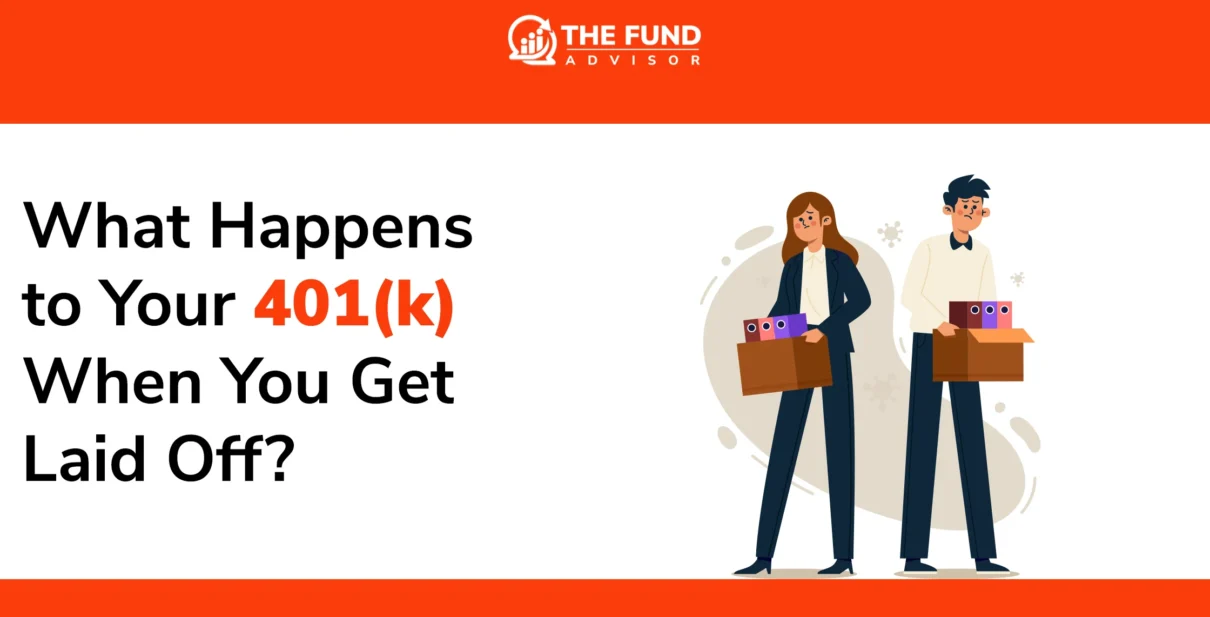
There are many general reasons for which an employee can get laid off, not needing much of the workforce is one of them. But this situation comes with serious financial uncertainties and economic crises that become complicated to resolve. In this context, what happens to your 401(k) when you get laid off makes sense.
This is because retirement savings accounts, like a 401(k), are one of the most valuable assets a person can have. SO, let’s understand how to counter such situations.
What Happens to Your 401(k) After a Layoff?
Laying off comes with the complexities that affect the finances as well as the future. However, if we talk about the 401(k) account, then it is always yours. Please note that the retirement accounts an individual has offered by the employer are owned by the employee.
The contributions, investment returns, and if the account is vested with the employer’s match, all funds are owned and can be claimed by the employee even after getting laid off. It’s up to you what you want to do with this account. You typically have four main options:
- Leave your 401(k) with your former employer
- Roll it over into an IRA
- Roll it over into a new employer’s 401(k) plan
- Cash it out
During a layoff, a company terminates multiple employees at a time. Securing the financial assets, like a 401(k), is very important in such situations. Did you know, many people who get laid off think, Do I lose my 401(k) if I get laid off, but this is not true. Your contributions are always yours.
Common Reasons for Getting Laid Off
What happens to your 401(k) when you get fired? Layoff doesn’t mean you are fired; it is a decision due to some business-related aspect, not because of the employee’s performance. And understanding the reason will help to reduce stress and make further steps:
Company Restructuring
Many organizations may eliminate positions or departments to make the overall operational process organized and productive.
Creativity Seeking
This is a unique reason and also one of the common ones. New talents come with new ideas and creativity. Some companies lay off their workforce to add an exceptional employee who can think based on today’s world.
Economic Downturns
If your company goes into a downturn, then due to the losses or reduction in revenue, laying off some employees can reduce the monthly expenses significantly. Some companies lay off newcomers, some remove the experienced, whose salaries are higher than compared of their juniors.
Mergers and Acquisitions
In the case where two or more companies are getting merged, then due to the delicacy of positions, departments cut off employees the similar posts.
Automation and Technology Shifts
This is a general reason; sometimes the old technologies, including machinery and software that a company is using replaced with the latest ones. Here, the HR department and the organization itself need to hire the skilled one who has expertise in using the new tech.
Loss of Major Clients or Contracts
Many companies run on some major projects and clients. More than 50% of their revenue comes from them. In the case where these clients are lost, the company needs to reduce its expenses by laying off employees.
As mentioned, laying off doesn’t mean firing due to an employee’s performance or any activity. But because of some professional reasons, companies lay off employees to compete with the market. What happens to your 401(k) when you get laid off is not solved yet.
Vesting of 401(k) When You Get Laid Off
For every individual who is working, it is important to understand what vesting is and how it works. First, note that retirement accounts like 401(k) allow employees’ contributions and employer match as well. Vesting means you have gained control over the complete fund of your 401(k) account. So, funds, including your contributions, investment returns, and the employer’s match, can be claimed by you.
Employer match is extra money that you will get at the time of claiming this account. But there is a certain period after which you can only gain control over the employer’s match. Employers set their vesting schedules, usually falling into one of two categories:
- Cliff Vesting: This type of vesting applies a time limit for which you need to work with the same employer. Your 401(k) account will become 100% vested after a set number of years (commonly 3 years). If you leave before this time frame, you lose the employer match only, but your contribution and returns are always yours.
- Graded Vesting: This vesting is done over time. With time, a fixed percentage of 401(k) will become vested. For example, 20% per year over 5 years. If you’re laid off after 3 years, you may be entitled to 60% of the employer contributions.
How Do I Know If I’m Full Vested in My 401(k)?
To know whether your 401(k) is fully vested or not, you can either contact your plan administrator’s department or find it in the user’s dashboard. Most of the dashboards show two balance sheets; in one, there is the contribution balance, and in the other, the vesting amount is shown.
If both numbers are the same, then you are fully vested, and if the amounts are different, then there is some part that is not vested. If you have been employed with the same employer for than 5 or more years, then typically your 401(k) is fully vested.
Many people ask, what happens to an unvested 401(k) if laid off? The answer is you simply didn’t get the unvested funds. Yes, because based on the employer’s terms and conditions, the vesting period is defined, and if you leave or get laid off within this period, then you will lose the employer’s match, which is not vested yet.
What Happens to Your 401(k) When You Get Laid Off?
See, lay off doesn’t affect your 401(k) account; the ownership is still in your hands. However, after getting laid off, many people ask, What to do with the 401(k) after getting laid off? You have various options like leaving the plan with the employer, rolling over it into an IRA or a new 401(k), and just cashing out the funds. Based on the requirement, people select a way to manage this account.
It is important to know the taxations, penalties, and other aspects of working with a 401(k) after getting laid off. Cashing out funds from a 401(k) account is considered a normal income or distribution, which is taxable too. And if you have done it before the age of 59½ years, then you need to face a 10% early withdrawal penalty.
It is advised to choose the rollover method, whether in an IRA or in a new 401(k) associated with the new employer. In this way, you don’t need to face any penalty and even taxation. Surprisingly, you can also continue to grow the funds using the investment option of these accounts.
What Happens to 401(k) Loans After Layoff?
If you have an outstanding 401(k) loan, then you are asking, What happens to your 401(k) loan when you get laid off. Here, you’ll need to take action quickly.
- Repayment window: If you get laid off and have an outstanding 401(k) loan, then you have 60–90 days to repay the full outstanding balance.
- If you don’t repay it, the loan becomes a distribution, subject to income tax and possibly a 10% early withdrawal penalty.
- This can create a significant tax bill, especially if the loan was large.
If you get laid off with an outstanding loan, then quickly contact your plan administrator and the loan department to take the required steps before anything unwanted happens. Many people ask, how to repay 401(k) loan after getting laid off.
Conclusion
Getting laid off generates many complications and problems that the individual needs to face. Whether you are asking, How do I access my 401(k) after termination of employment or What happens to your 401(k) when you get laid off, the account is always yours. You can manage the funds of your 401(k) account.
But if your account is not fully vested, then you will not get the employer contribution; however, your contributions and earnings are completely yours. Always consult your plan administrator and HR department regarding this uncertainty. Understand how to transfer 401(k) fund to new employer.
Frequently Asked Questions
Can an employer take back their 401k match?
If your 401(k) account is not vested yet, then you don’t have any ownership of the employer’s contributions. But the contributions that you have made and the investment returns are complete, and your employer cannot take these funds.
How do you move your 401k when you get laid off?
You can use the direct transfer method to move your 401(k) into an IRA after getting laid off. And also, if you have started a new job, then you can transfer these funds into the employer’s retirement savings account. This will prevent penalties and tax implications.
How long do you have to move your 401k after being laid off?
There is no timeline to move your 401(k) account. You can even leave the account with your employer after getting laid off. This will continue the growth, but you cannot make any further contributions.
What is the penalty for cashing out 401k after termination?
If you are over the age of 59½ years, then you can just cash out and need to pay the regular taxes on the distribution you have made. But if you are under this age, then a 10% early withdrawal penalty will be applicable on the withdrawal amount.