


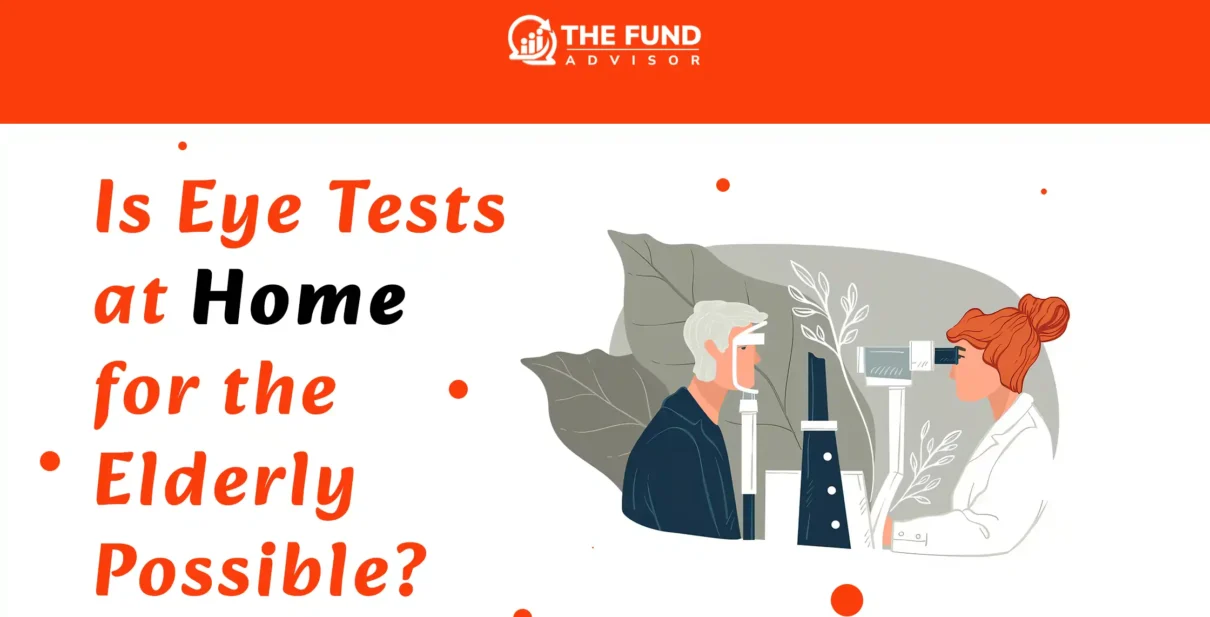
Eyesight is one of the most important senses of one’s body. With aging, eyes become weak, and issues related to this are very common in this phase of life. Many of the seniors are dealing with any type of sight-related problems, such as refractive errors (near-sightedness, farsightedness, astigmatism, presbyopia), cataracts, glaucoma, and age-related macular degeneration (AMD). With this, having perfect eye tests at home for the elderly can offer a feeling of comfort and security.
It is very important to get frequent eye tests at this age, but sometimes it becomes difficult to do this by visiting a clinic on your own. While mobility is also a major issue for senior citizens, these types of home visit services can be seen as a helpful opportunity to stay healthy.
Why Eye Tests at Home are Important for Seniors?
There is a wide range of reasons that make it important for seniors to have regular eye tests. Maintaining good eyesight throughout life is important to see things clearly. Some reasons are:
- Prevent accidents and falls: Weak vision increases the risk of tripping, misjudging steps, and bumping into objects.
- Support daily independence: Not just for seniors, but every person needs clear sight to read medications, manage finances, cook safely, and follow daily routines.
- Improve emotional well-being: Vision is one of the most important parts of our lives. Having good vision helps in seeing the world clearly and keeps working on hobbies like reading, watching TV, and recognizing faces, which provides confidence among individuals.
- Social Isolation: People with vision problems tend to avoid social interaction and avoid going outside because of the dust that irritates them. For maintaining social life, clear eyesight is essential.
- Early detection of eye diseases: Early eye checkups help in the detection of any diseases in their early stage, where the cure gives the most favourable results.
- Lower healthcare costs: Regular eye tests at home for the elderly reduce the risk of high expenses due to any advanced medical condition.
- Encourage proactive care: Regular eye test ensures the good health of the sensory organs. Also, it prevents any unwanted permanent eye issues like blindness.
Common Eye Problems in the Elderly
Aging comes with many health-related problems, one of which is sight issues. There are some common vision-related problems that senior citizen faces. Cataracts are a vision problem where the eye lens becomes blurry, which causes hazy and unclear sight. Glaucoma is another problem that happens due to damage to the optic nerve, causing peripheral vision loss.
Age-related macular Degeneration (AMD) is also one of the common problems among seniors. In this, the central vision is lost, which makes it difficult reading and recognizing faces difficult. A problem caused due to diabetes is Diabetic Retinopathy. In this, the damage to retinal blood vessels due to diabetes leads to blurred and impaired vision. Some close focus problems, like Presbyopia, make it difficult to read. Dry eye is also common in seniors.
These are some common eye-related problems that seniors face with age. That’s why an eye test at home for the elderly is essential.
Types of Eye Tests at Home for the Elderly
Several tests are done to check the vision and eyesight in senior citizens. These are often common with other individuals also.
- Visual Acuity Test: This test is performed to check the near and distance vision. It uses a printed Snellen Chart which will be placed at a certain distance (Usually 10–20 feet for distance, 14 inches for near). There are some letters written on the chart, and the senior asked to read the letters with one eye covered at a time. Here, multiple result of multiple checkups is compared, and then the appropriate decision is made.
- Amsler Grid Test: This is another type of eye test where there is a grid with dots on the intersections. The individuals are asked to close one eye and focus on a dot. If, after some time, the line appears wavy, distorted, or missing, this means the person has AMD. This simply means that the senior is suffering from macular degeneration.
- Contrast Sensitivity Test: This test helps in identifying cataract or diabetic retinopathy problems. Here, there are letters on a sheet in a decreasing contrast format. As the sight moves from up to down or left to right, the contrast of the letters written keeps decreasing.
- Color Vision Test: It is used to test the color blindness or optic nerve damage. In this, there an online or printed Ishihara plates with different color numbers on them. The person asked to read the number, the person with a specific color blindness will not be able to see the number written.
- Peripheral Vision Test: With this, we can check problems like glaucoma. In this, an object like a pen is placed in front of the person and moved from the side to check the visual misfunctioning.
Affordable Eye Tests at Home for the Elderly
For seniors, there are various ways to minimize the cost of specific and quality eye tests at home, even to zero. With the help of government programs and nonprofit organizations, the expenses related to eye health can be reduced. People often ask, Does Medicare cover eye care for seniors, So, below are all the examples and answers to the questions.
Medicare and Medicaid
The Medicare Part B (Medical Insurance) provides eye tests for seniors who are at more higher risk of glaucoma, diabetic retinopathy, or other serious conditions. This is only valid for a clinic visit checkup; in fact it does not include in-house tests. The Medicare Part C (Medicare Advantage) offers more flexibility and features. It provides regular eye exams, eyeglasses, and contact lenses.
Medicaid plan may vary based on state rules, but it provide some additional support to senior citizens who live on a limited income. It offers no-cost or highly affordable eye exams.
Lions Club International
Lions Club International is an international nonprofit organization that provides community-based programs while it offer no-cost or affordable eye exams and prescription glasses. There are some Lions clubs branches that operate mobile clinic that makes eye examinations more accessible for senior citizens. These types of organizations help low-income senior citizens to stay healthy and aware.
Prevent Blindness America
It is one of the top organizations that offers no-cost or discounted vision screenings for seniors. This program also provides informational content and learning modules to senior citizens to know about eye health. It helps seniors connect with local resources, clinics, and vision care professionals.
EyeCare America (American Academy of Ophthalmology Program)
This is a specialized program run by the American Academy of Ophthalmology to provide no-cost medical eye exams for U.S. seniors aged 65 and older. It operates by matching individuals with volunteer ophthalmologists across the country. This provides a comprehensive eye checkup for senior citizens.
Local Health Assistance
Sometime in a year’s state hospitals and government clinics run several no-cost eye checkup days. This aims to provide free medical eye examination to people with low income. Some senior centers and community programs also offer eye care tests or full body tests, which are a good option to get eyesight examined.
How to Perform Eye Tests at Home?
There is a simple eyesight test that anyone can perform at home on their own. This is one of the very simple tests that seniors can easily test their vision.
- First, you need to prepare an environment with good lighting and then use your visual aid, which you use daily.
- Always test one eye at a time. By closing the other eye with your hand, see the letters in front of you.
- Place a card or something with letters in front of you at a distance of at least 10–20 feet for distance, 14 inches for near sight.
- Then note the results and perform this test frequently with noting down the results to compare.
- Repeat this regularly and compare with previous results to know the difference towards the positive side or the negative side.
There are some limitations associated with the eye tests at home for the elderly or hiring a home eye tester. These limitation makes us visit the clinic for better clarification.
- A home eye test cannot replace professional care. This is because the people who do home tests are not that qualified to perform any cure for the problem.
- Sometimes, home care tests cannot detect diseases properly. Due to a lack of all equipment and machines, it is not possible to detect very early disease symptoms.
- Some seniors are unable to perform the test properly because of a lack of mobility.
- The mobile test setups lack some essential equipment.
- A home test cannot provide medication advice or treatment, or a cure.
Conclusion
The eye tests at home for the elderly are as important as other health checkups. This is because eyesight is one of the most important senses of a human being. Eyes enable us to see the world and perform tasks with visual power. With age, the eyes are the common organs that weaken, and without proper care, the risk of having a vision-related disease increases.
Also, a regular eye checkup prevents any development of problems that can lead to serious sight diseases.
Frequently Asked Questions
- Can an eye doctor come to your house?
Many clinics provide home visit checkups for senior citizens. Sometimes they charge an extra amount of money for that, and some organizations provide this type of facility on a complimentary basis. Mostly for quality tests and medication, people are required to go to the doctor’s office. Regular eye examinations are essential to avoid any risk of big diseases.
- How reliable are online eye exams?
The online eye examinations provide a mobile eye care facility that a person can have from anywhere. However, these facilities are limited because they can only perform only few eye tests, which are not sufficient to detect an eye disease. These types of checkups are good for normal conditions like far vision problems or near vision problems to prescribe some cures and glasses. But they are not good for detecting a real eye-related disease.