


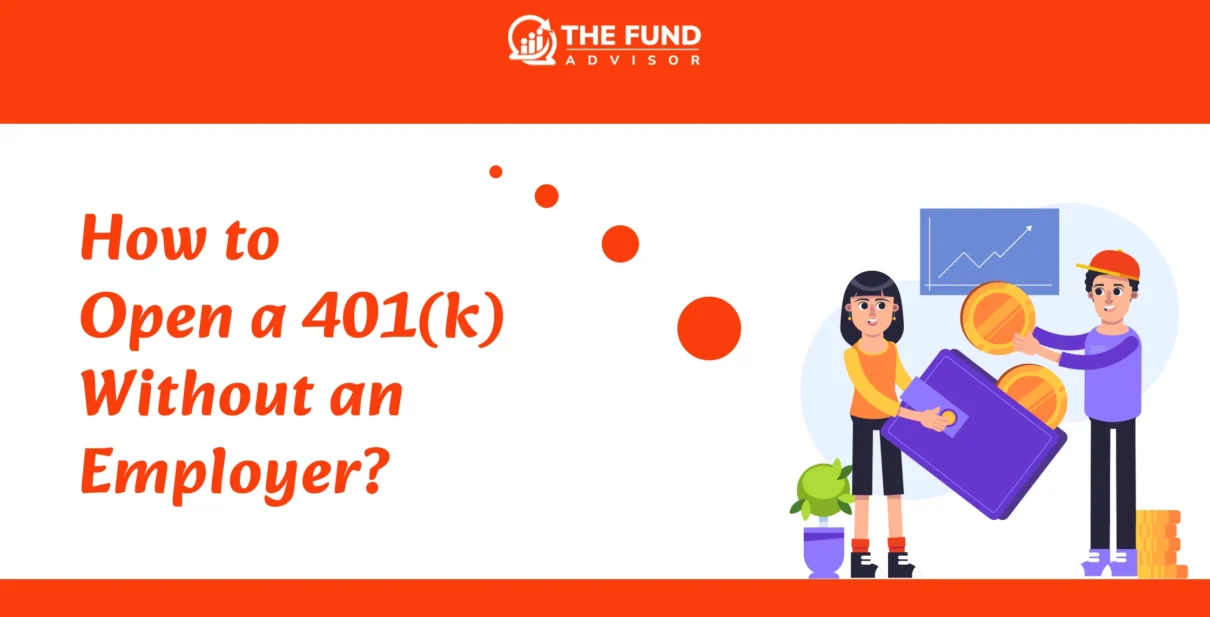
When we talk about retirement savings then a common account that comes to mind is a 401(k). Due to features such as savings, investment, and growth, this account has become a popular choice among many individuals. However, as we all know, this is an employer-sponsored account, which is only available to employees. In this, people often ask, How to open a 401(k) without an employer.
However, it is possible to have a 401(k) account without an employer, but not a traditional one. So, this means there are ways using which you can save for retirement without the involvement of employer. Let’s discuss this concern in depth.
Can You Open a 401(k) Without an Employer?
This is a genuine and common question among individuals who are self-employed or do not have any employer that can I open a 401(k) on my own. However, it is possible to have a 401(k) account without being associated with an employer, but not the traditional one. The IRS allows the self-employed or business owner to have a Solo 401(k) account, which is an individual savings accouqnt.
A solo 401(k) account is very similar to the traditional 401(k) account in providing the contributions and tax-deferred investment advantage. It provides equal contribution opportunities as the traditional 401(k) account does, including both the employer and the employee. For people who are self-employed or have some other work background which are not covered in a traditional account, a solo 401(k) can be an ideal option.
Even if you are doing a job, you can still have a separate solo 401(k) account for your other self-employed income to optimize your retirement savings and empower the growth potential.
What Is a Solo 401(k)?
A solo 401(k) account is a strong financial tool that is available for individuals who are related to self-employed or business background. IRS applies some rules and regulations for the use of this account. It is only available to individuals who are self-employed with no employees. The individual may have a spouse as an employee; only a non-spousal employee is disqualified from eligibility.
There are two types of Solo 401(k) plans:
- Traditional Solo 401(k): Contributions are made pre-tax, and taxes are paid at withdrawal.
- Roth Solo 401(k): Contributions are made with after-tax income, and withdrawals are tax-free.
Who Can Open a Solo 401(k) Without an Employer?
This account is one of the best options that a self-employed individual or a person who wants an individual-level 401(k) account. It is an ideal that helps in contributing to a 401(k) without employer contributions to retirement savings. You’re self-employed or operate as a sole proprietor, LLC, S-Corp, or partnership, freelancing, consulting, or side gigs.
How to open a 401(k) without an employer. This is done using a solo 401(k) account, as mentioned. Also, if you have one or more full-time non-spousal employees, then you are going to be disqualified from getting it.
How to Open a Solo 401(k) Without an Employer?
For opening a solo 401(k) account, you need to follow certain steps to get easy access to this retirement savings option. The steps are as follows:
- Eligibility Verifications: First, check whether you are eligible for having a solo 401(k) account or not. Only if you are self-employed and have no active full-time working non-spousal employees with you.
- Choose a Solo 401(k) Provider: If you are eligible, then find a reputable solo 401(k) provider such as Fidelity, Vanguard, Charles Schwab, or E*TRADE. Evaluate based on low fees, investment options, and customer support.
- Application Request: Complete all the paperwork and document submission to the provider of your choice. Generally, you need to have an Employer Identification Number (EIN) and other documents such as business details, documents, etc.
- Start Contributions: Now you can start funding your solo 401(k) account from both the employer and employee side.
- Investment Options: Select an investment option to facilitate the growth from options such as mutual funds, ETFs, stocks, or bonds according to your risk tolerance and retirement timeline.
If you are asking how to open a 401(k) without an employer. Then the opening procedure of a solo 401(k) account is a simple but sequential process that requires focus and better awareness.
Advantages of Solo 401(k) Account
There are various advantages which the Solo 401(k) offers to the account holder. These are mentioned below:
- In the tradtional Solo 401(k) account you can get tax-deferred investment growth which empowers the overall retirement savings. And in the Roth options you can enjoy tax-free withdrawals.
- Solo 401(k) account provides high contribution limits as compared to aother retirement saving accounts.
- The account holder can get a loan in sudden fund need on the vested money of this account.
- Solo 401(k) provides higher flexibility and control over the funds to the account holder as no employer is associated with this account.
Many other benefits this account holds like the account holder can act as an employer and a employee. It is very important to acknowledge all the factors before making any decision.
Contributions Limits and Rules
The contribution limits and rules of this account are like those 401(k) account. The individuals who own a solo 401(k) account can make contributions which is combined of both employer and employee. For 2025, the contribution limits are:
- Employee Contribution: For the employees’ contribution, an individual can make up to $23,000 (or $30,500 if age 50 or older).
- Employer Contribution: For the employer side, you can contribute up to 25% of your net self-employment income.
With this, the total contributions you are making will become $69,000 and $76,500 for catch contributions. This will make the contributions equal to the 401(k) account. For both traditional solo 401(k) and Roth accounts, the contribution limits are the same.
What Are My Options If I Don’t Have a 401(k) at Work?
If you are doing a job or are self-employed and don’t have a 401(k) account. Then, you still have various options that help you in saving for retirement. You can even get better investment options by using an account like an IRA. The options you have:
Traditional IRA / Roth IRA
An Individual Retirement Account or IRA is a retirement savings account that helps individuals to save money from their monthly income and make investments to achieve growth. This account is completely administered by the account holder.
Solo 401(k)
As we have already learned about this retirement saving option. It provides a comprehensive savings advantage with tax-deferred investment options. The people who are self-employed can choose this because it is an ideal option for such employment backgrounds, such as freelancers, small business owners, etc.
SEP IRA
It is a type of individual retirement savings account that is specially designed for freelancers and small business owners. This account provides higher contribution limits as compared to other accounts, like an IRA. With investment and growth options, it is used by many individuals to make decent retirement savings.
There are some other options also available, which are designed for unique work backgrounds to ensure the average retirement savings for all families.
Conclusion
How to open a 401(k) without an employer is a very common question for those who are self-employed. But not but the traditional 401(k), it can be possible with the help of a solo 401(k) account. Saving for retirement is very crucial to empower the financial well-being of a family in times when the savings are the only source of income.
Whether your question is, can you start your own 401(k) without an employer, or something else, the answer is the same. Every individual needs to save for retirement, even if they don’t have an employer. With the availability of various retirement options like solo 401(k), it becomes possible to save some money for the self-employed or small business owners.
Frequently Asked Questions
Do I need an employer to start a 401(k)?
Yes, a 401(k) account is an employer-sponsored retirement savings account that can only be accessed through an employer. So, it is required to have an employer to have a 401(k) account. Instead, if you belong to a self-employed or business background, then you can have a solo 401(k) account if you qualify for the same.
Is a solo 401k worth it?
If you are self-employed or don’t have an employer, then a solo 401(k) account can be the best option to choose for making decent retirement savings with a tax-deferred investment advantage.
Do I need an EIN for a solo 401k?
Yes, for opening a solo 401(k) account, you need an Employer Identification Number (EIN), and you also need to submit some documents related to your employment and other personal information, as well as identification documents.