


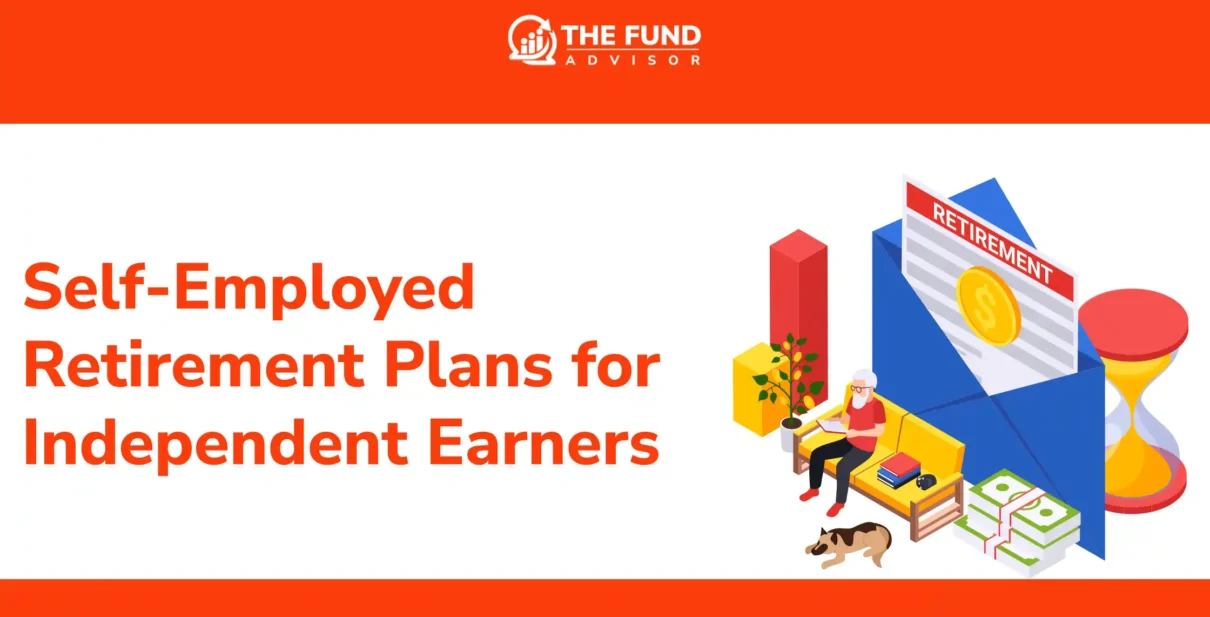
Self-employed people are the ones who prefer to work in an independent and flexible environment. However, the freedom comes with greater responsibility because the frontier party or client will be in direct contact. Unlike the salaried, self-employed retirement plans need extra planning and effort. The salaried persons get a retirement savings account like a 401(k), whereas in self-employment, the person needs to take care of the retirement savings and future financial aspects.
Thankfully, there are some retirement saving options and coverage plans available that help people to do the right thing for a secure financial well-being. Let’s start.
Why is Retirement Planning Crucial for the Self-Employed?
Self-employed professionals, including business owners, freelancers, or individual contractors. In this, they need to focus on every aspect to make proper running of this hustle. Especially when we talk about retirement planning, people who are self-employed need to do everything on their own. However, there are various savings accounts available for the same purpose; by using them, retirement planning won’t be a big deal.
Unlike the salaried or traditional employees, who have employer-provided savings plans. The independent contractors have the responsibility to create their own retirement shield.
- No employer benefits: As mentioned, self-employment does not contain employer benefits. This is because there is no employer for the self-employed person. They are their own boss. So, the future retirement net will completely depend on the person.
- Tax advantages: The salaried jobs are tied to several taxation norms. However, it is often seen that the self-employed come with higher tax implications due to irregular income. So, if they pursue a retirement savings account, then this is very helpful to make tax-deferred contributions and retirement growth.
- Compounding growth: Starting early retirement savings will open an advantage of significant growth. The longer you contribute to saving, the longer the investment will grow. Even a normal monthly amount of savings will result in a big retirement asset.
- Financial independence: A decent self-employed retirement plan will provide peace of mind. This will ensure financial freedom, and you can work with full efficiency without getting tense about retirement life.
Types of Self-Employed Retirement Plans
There are many retirement savings accounts available in the market, which could be very helpful to self-employed individuals. From retirement planning to tax-deferred growth, these plans offer a comprehensive package of benefits.
SEP IRA (Simplified Employee Pension)
The SEP IRA is a type of retirement savings account that operates on an individual basis. It is one of the most popular retirement plans, which provides several benefits and compounding growth.
- Who it’s for: It is best for self-employed individuals who have only a few or no employees under them.
- Contribution limits: The contribution limits of this account are higher than others. The account holder can contribute up to 25% of the net annual income or $69,000.
- Tax benefits: Contributions are tax-deductible, reducing taxable income.
- Flexibility: Punctual contributions are not necessary, which makes it more flexible.
This is a good retirement savings option, but it doesn’t have the Roth option. Meaning after-tax contributions are not possible.
Solo 401(k) (Individual 401(k))
As the name suggests, the Solo 401(k), which is also known as Individual 401(k), is one of the most favorable options for sole proprietors and business owners with no employees (other than a spouse).
- Who it’s for: Freelancers, independent contractors, and small business owners without employees.
- Contribution limits (2025): The contribution limits of this account are up to $23,000 as employee deferral, plus 25% of net self-employment income as employer contribution, with a total cap of $69,000.
- Tax benefits: If you are using a normal account, then the contribution will reduce the taxable income. While the Roth solo 401(k) option reduces taxable income, Roth Solo 401(k) options allow after-tax contributions.
It offers high contribution limits but needs more paperwork and documentation. Also, it requires annual filings once assets exceed $250,000.
SIMPLE IRA (Savings Incentive Match Plan for Employees)
The SIMPLE IRA plan is designed especially for business owners and self-employed individuals. It is similar to the other retirement saving accounts, which are intended to secure after-work life.
- Who it’s for: Self-employed individuals and businesses with 100 or fewer employees.
- Contribution limits (2025): $16,000 in salary deferrals, with a $3,500 catch-up contribution if age 50+.
- Tax benefits: Contributions are tax-deductible, lowering taxable income.
This is one of the most popular self-employed retirement plans. It is a simple account that is more flexible than a 401(k) account. However, it has low contribution limits and mandatory employer contributions.
Traditional IRA and Roth IRA
IRAs are one of the most famous and widely used retirement savings accounts that offer monthly contributions and tax-deferred investment growth. It also has a Roth option, which enables after-tax income contributions. So, many people ask, What is an IRA, it stands for Individual Retirement Account. It is intended for individual ownership account holders, like the self-employed.
- Contribution limits (2025): $7,000 annually, with a $1,000 catch-up contribution for individuals aged 50 or older.
- Traditional IRA: Contributions are tax-deductible (depending on income).
- Roth IRA: Contributions are made after-tax, but withdrawals in retirement are tax-free.
It has wide investment options that offer individuals comprehensive retirement support. However, it contains lower annual contribution limits.
Defined Benefit Plan
In self-employment, some individuals have high-income potential. So, to maximize retirement savings, a Defined Benefit Plan is a good choice.
- Who it’s for: Individuals who are high earners can use this option to make a strong retirement foundation.
- Contribution limits: Can be significantly higher than other plans (often exceeding $100,000 annually).
- Tax benefits: Contributions are tax-deductible, and benefits are predetermined based on salary and years of service.
These types of retirement saving plans can help self-employed individuals to make a decent retirement saving that help them in managing the after-work life expenses.
Tax Benefits of Self-Employed Retirement Plans
As compared to salaried employees, the self-employed are more likely to be in higher tax brackets. This is because of the income mode. However, retirement savings accounts like as mentioned above, offer pre-tax income contributions, which reduces the overall taxable income. Also, these accounts provide tax-deferred investment options which suit best suited to freelancers and business owners.
- Immediate deductions: Contributions reduce taxable income, lowering your current year’s tax bill.
- Tax-deferred growth: Investments grow tax-free until withdrawal.
- Roth options: With Roth IRAs and Roth Solo 401(k)s, contributions are made after-tax, but withdrawals in retirement are completely tax-free.
- Self-employment tax reduction: Contributions can also lower your taxable self-employment income.
How to Choose the Best Retirement Plan for Self-Employed Individuals?
Choosing the right retirement savings plan for self-employed individuals requires proper planning. Based on various factors and aspects, the savings account will be selected.
- Income level: Based on the annual income, the account should be chosen. The people who are high earners can have a Solo 401(k) or a Defined Benefit Plan. These types of accounts provide higher contribution options.
- Number of employees: People who have employees can have a SEP IRA or SIMPLE IRA for retirement savings.
- Flexibility: There are some retirement saving plans available that allow for modification of the contribution based on income changes.
- Desire for Roth contributions: Tax-free growth options are available with a Roth IRA or Solo 401(k).
- Administrative work: While Defined Benefit Plans demand more work, Traditional and Roth IRAs are the easiest to administer.
Conclusion
Self-employment is a self-owned income source that involves managing your own financial future, including retirement planning. There are various self-employed retirement plans available that can be chosen based on your income level, objectives, and company structure, regardless of whether you are an independent contractor, freelancer, or small business owner. A real and strong financial strategy can ensure a safe and secure future. By using several options like SEP IRA, Solo 401(k), SIMPLE IRA, Roth IRA, and Defined Benefit Plans, doing this won’t be a big deal.
Choose the best retirement savings plan for your needs, start early, and make regular contributions. You can have a stress-free and financially stable retirement tomorrow if you plan wisely today.
Frequently Asked Questions
Is a 401k or IRA better for the self-employed?
The 401(k) account is an employer-sponsored retirement savings account, which is not intended for self-employed individuals. However, the IRA is an individual retirement account which do not require any employer and is owned only by the person. So, it is better for the self-employed. Also, there is an option available, Solo 401(k), which offers similar advantages to of IRA.
How do self-employed people plan for retirement?
Unlike salaried jobs, where the employer mostly provides retirement saving options and assistance. Self-employed individuals need to plan their complete future strategy on their own. For this, they can have a retirement savings account and start early contributions to maximize the overall retirement savings and growth.
What is the best retirement plan for a small business owner?
There are many retirement plans that small business owners can have. Accounts like SEP IRA, Solo 401(k), IRA, SIMPLE IRA, Defined Benefit Plans, etc. are very effective option that promotes the future saving potential and investment growth.